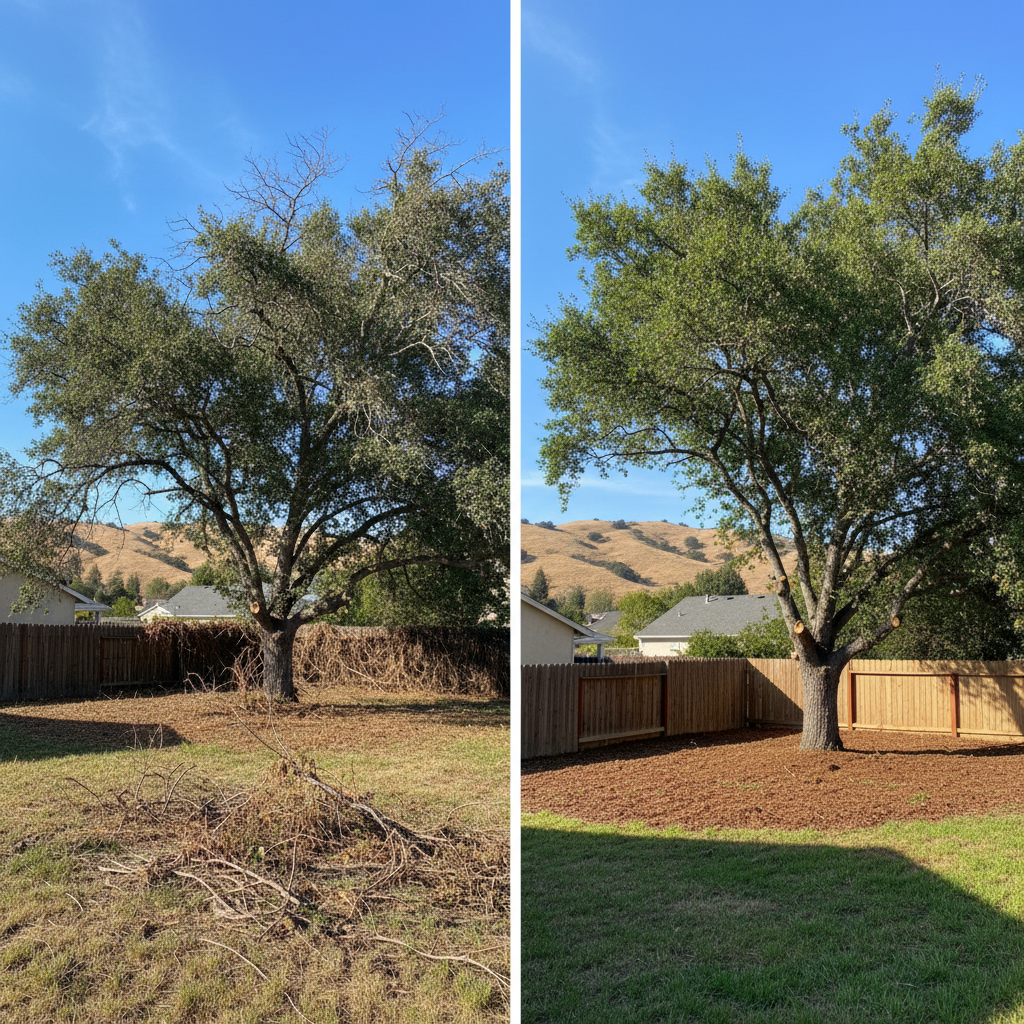
You've got trees on your property, right? And eventually, they need some attention. Maybe they're getting too big, blocking a view, or just looking a little wild. When you start looking into getting them trimmed, you'll hear about a couple of main approaches: topping and proper pruning. And let me tell you, these aren't just two different ways to do the same thing. They're worlds apart, especially for trees here in Fairfield.
What is Tree Topping?
Let's start with topping. This is when someone just cuts off the entire top or a significant portion of the main branches, often leaving stubs. It's usually done to reduce the tree's height quickly or to make it look 'smaller.' You see it a lot, especially with older, overgrown trees, sometimes in those older neighborhoods near Travis Air Force Base where folks might have planted trees too close to their homes decades ago.
The Downside of Topping
Now, I'm going to be blunt: topping is almost always a bad idea. It's cheap upfront, sure, because it's fast. Anyone with a chainsaw can do it. But that's where the benefits end, and the problems begin.
- Durability and Health: When you top a tree, you're essentially wounding it severely. Those large cuts don't heal well. They create entry points for insects, fungi, and diseases. The tree goes into shock, trying to regrow quickly, and it sends out a bunch of weak, fast-growing shoots (called 'water sprouts' or 'epicormic growth') right below the cuts. These sprouts are poorly attached and much more likely to break off in a strong wind, which we definitely get here in the North Bay.
- Maintenance: Because those water sprouts grow so fast, you'll be back to square one in a year or two, needing another trim. So, while it seems cheaper initially, the maintenance costs add up fast, and you're stuck in a cycle of constant, damaging trims.
- Appearance: A topped tree looks ugly. There's no getting around it. It loses its natural shape, often looking like a hat rack or a mutilated stump. It never really recovers its aesthetic appeal.
- Cost: As I said, the initial cost might be lower, but the long-term cost is much higher due to increased maintenance, potential disease treatment, and eventually, the need for full tree removal because it's become a hazard.
What is Proper Pruning?
Proper pruning, on the other hand, is an art and a science. It's done by trained professionals – arborists – who understand tree biology. We make specific cuts to remove dead, diseased, or crossing branches, improve the tree's structure, thin the canopy for better light penetration and air circulation, and reduce overall weight without butchering the tree.
The Benefits of Proper Pruning
This is the approach that keeps your trees healthy, safe, and beautiful.
- Durability and Health: Proper pruning promotes strong, healthy growth. By removing problematic branches and thinning the canopy, you reduce the risk of disease and insect infestation. The tree's natural structure is maintained or improved, making it much more resilient to storms and high winds. Here in Fairfield, with our hot summers and occasional strong winds coming off the Delta, a strong, well-pruned tree is a safer tree.
- Maintenance: While it might cost a bit more upfront for a skilled arborist, proper pruning means less frequent maintenance. The cuts are made correctly, encouraging healthy growth in the right places, so you won't have those weak, fast-growing sprouts that need constant attention. You're looking at a pruning cycle of every 3-5 years, sometimes even longer, depending on the species.
- Appearance: A properly pruned tree maintains its natural beauty and form. It looks healthier, more balanced, and enhances your property's curb appeal. You won't have those unsightly stubs or a lopsided canopy.
- Cost: The initial investment is higher than topping, but the long-term cost is significantly lower. You save on frequent maintenance, avoid costly disease treatments, and extend the life of your tree, delaying expensive removal. It's an investment in the health and value of your property.
My Recommendation for Your Fairfield Trees
It's pretty clear where I stand. For your trees here in Fairfield, whether they're mature oaks, sycamores, or fruit trees, always go with proper pruning. It's the only way to ensure the long-term health, safety, and beauty of your trees.
Don't fall for the quick, cheap fix of topping. It'll cost you more in the long run and leave you with an unhealthy, ugly tree that could become a hazard. When you're ready to give your trees the care they deserve, give Apex Tree a call. We know trees, and we know what works best for our local conditions.