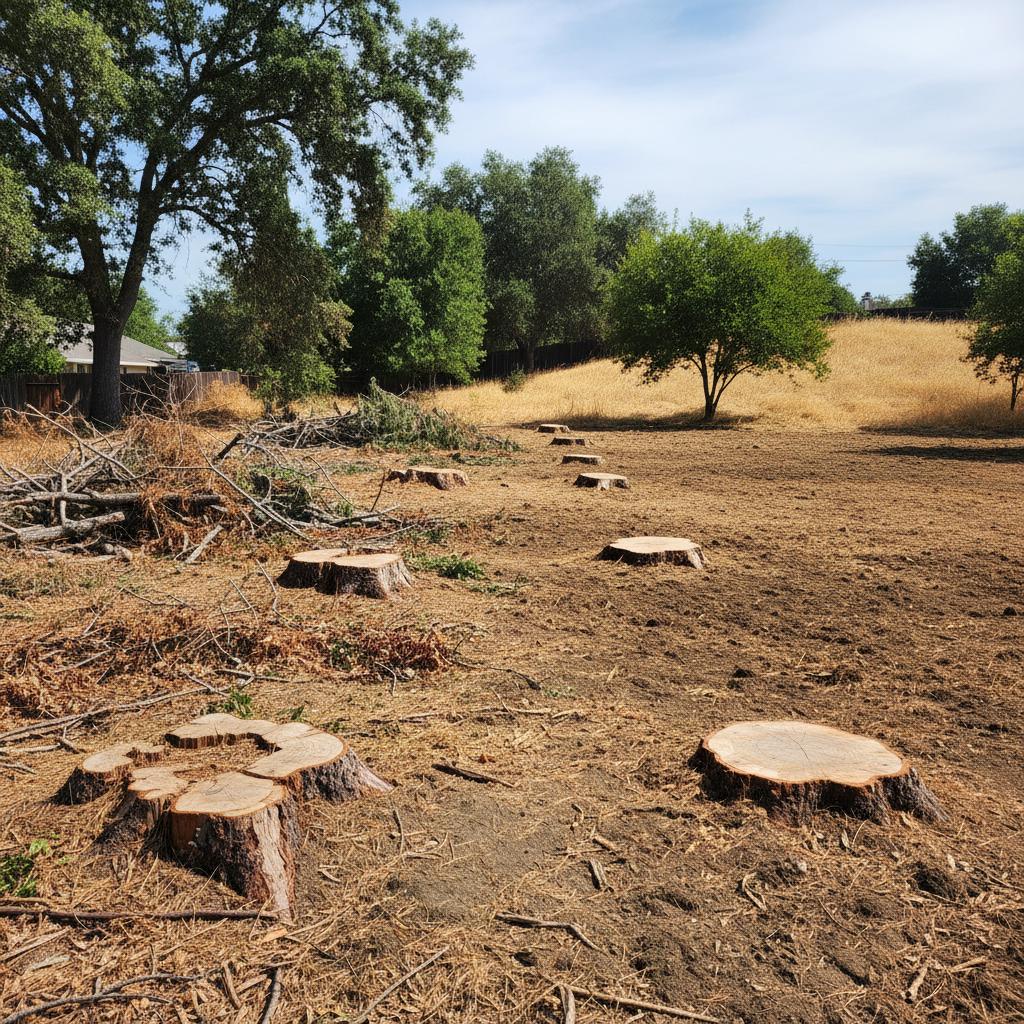
So, you've got a piece of land in Fairfield you want cleared. Maybe you're building, maybe you just want to reclaim some overgrown space. Whatever the reason, you're probably looking at a couple of main ways to get it done. Today, I want to talk about two big ones: forestry mulching and what I'd call traditional clearing with excavators and dozers. They both get the job done, but they do it very differently, and those differences matter a lot for your property and your wallet.
Forestry Mulching: The Eco-Friendly Grinder
Let's start with forestry mulching. This is where a specialized machine, often called a mulcher or masticator, comes in and grinds up all the vegetation – trees, brush, stumps, everything – right where it stands. It turns it all into a layer of wood chips and organic material that gets spread across your land.
Cost
Generally, forestry mulching can be more cost-effective for clearing dense brush and smaller trees. You're not paying for hauling away debris, which is a huge expense with traditional methods. The machine just processes it on site. For a typical overgrown lot here in Fairfield, especially those with a mix of scrub oak and invasive acacia, it's often the cheaper upfront option.
Durability & Maintenance
This is where mulching really shines, especially in our climate. That layer of mulch it leaves behind? That's gold. It helps suppress new weed growth by blocking sunlight, and it holds moisture in the soil, which is a big deal during our dry summers. You'll still get some regrowth, but it's usually less aggressive and easier to manage than on bare earth. Think of it as a head start on keeping your land clear. It also helps prevent erosion, which is a real concern on some of the steeper lots around places like Green Valley.
Appearance
After mulching, your land will have a uniform layer of wood chips. It looks pretty natural, like a forest floor. Some folks love this look; it can be very tidy and park-like. Others might prefer completely bare earth if they're planning to immediately build or lay sod.
Traditional Clearing: The Bare Earth Approach
Now, let's look at traditional clearing. This usually involves excavators, bulldozers, and sometimes even feller bunchers. They rip out trees, push over brush, and generally clear the land down to bare soil. Then, all that debris – logs, stumps, brush piles – gets loaded up and hauled away.
Cost
Traditional clearing can be more expensive, especially if you have a lot of large trees or dense, heavy brush. The biggest cost driver here is often the hauling and disposal of all that material. Landfill fees add up quick, and fuel for those big trucks isn't cheap. If you have a few massive oak trees that need to go, this is often the only way, but be prepared for the price tag.
Durability & Maintenance
When you clear down to bare earth, you're essentially creating a blank slate. But that blank slate is also an open invitation for weeds. Without any ground cover, you'll see new growth pop up much faster, and it'll often be tougher to control. You'll need to be on top of maintenance right away with herbicides or repeated mechanical removal to keep it clear. Erosion can also be a bigger issue on bare soil, especially with our winter rains.
Appearance
After traditional clearing, your land will be completely bare, just dirt. This is ideal if you're going to start construction immediately, pour a foundation, or bring in fresh topsoil for landscaping. It gives you a clean canvas.
My Recommendation for Fairfield Homeowners
For most homeowners in Fairfield looking to clear an overgrown lot, especially if you're not building immediately or just want to open up space, I lean heavily towards forestry mulching. Here's why:
- Cost-Effective: You save on hauling and disposal.
- Better for the Soil: The mulch improves soil health, retains moisture, and reduces erosion. This is crucial for our local soils, which can be pretty compacted and dry.
- Easier Maintenance: That mulch layer gives you a significant advantage in controlling regrowth.
- Natural Look: It leaves your property looking clean but still natural, which often blends well with our local landscape.
Now, if you're dealing with really massive trees that need full stump removal for a foundation, or you absolutely need completely bare, level earth for a specific construction project, then traditional clearing might be your only option. But for general land clearing, especially reclaiming areas that have gotten out of hand, forestry mulching is usually the smarter, more sustainable, and often more affordable choice.
We do both here at Apex Tree, and we can help you figure out which approach makes the most sense for your specific situation. Give us a call, and we can walk your property and talk through the best plan.